There has been some Tweeting recently about digital legacies, digital footprints and whether we are robbing kids of their legacies by not letting them download, save, or post work online. It got me thinking about the difference between legacies, footprints, and digital portfolios that we have been talking about for a long time, as compared with digital dossiers and digital identities as defined by Palfrey and Gasser in Born Digital.
In some ways, it’s a bit like the early days of multimedia. The terms mean different things to different people. Some of the artifacts that go into the creation of each are intentional, others unintentional, and others are out of our control.
We contribute to all of them, but so do others. If I do a vanity search for “Art Wolinsky”, I get a collection of things I have posted over the years and things others have posted about me. If I invest a few dollars do a search of public records, I get a lot of other information.
So how DO we define these different terms? I’m hardly an expert, but I like the Palfrey and Gasser terms. Our digital identities, which probably relate, rather than equate to digital footprints, are made up of those things we post to define who we are.
In my younger days, long before computers, that identity changed frequently as styles changed and I matured. Who I was yesterday was quickly forgotten, because it had little lasting documentation. Changing my hair, my clothes, and my mannerisms changed my identity.
Today, that is not anywhere as easy. Once I establish an online identity, it can be difficult to change, because who I was yesterday, is still alive and well online. Indeed, I may have intentional multiple identities, because I am one person in Facebook and another in SecondLife and so on.
Our digital dossier is out of our control. It made up of things that are stored digitally online, such as Social Security information, medical records, credit reports, etc. While they don’t outwardly contribute to my identity, they are none-the-less something we have to be aware of for privacy and security reasons.
The term digital legacy is used in many contexts, but it tends to be used more in education and relates more to portfolios, but I don’t think there is any clear line between footprints and legacy, because where we go and what we do contribute to our legacy and our identity.
I can’t help but wonder whether we are asking the wrong question. I don’t think we should be as concerned about whether we are robbing kids of their digital legacy if we don’t let them download digital media they create. I think we need to be more concerned about teaching kids about how to protect their digital identities so that the legacy they leave is one of which they are proud. Without that, what they post with or without our permission may create a legacy that will not serve them will in the future.
Monday, November 30, 2009

Thursday, November 26, 2009
A Moving Saga
 I wrote this a week ago while sitting in the Manchester, NH airport where they have free wi-fi, on my way to a workshop in DE, but I'm posting it on Thanksgiving, because I am soooo thankful that this part of our lives is behind us.
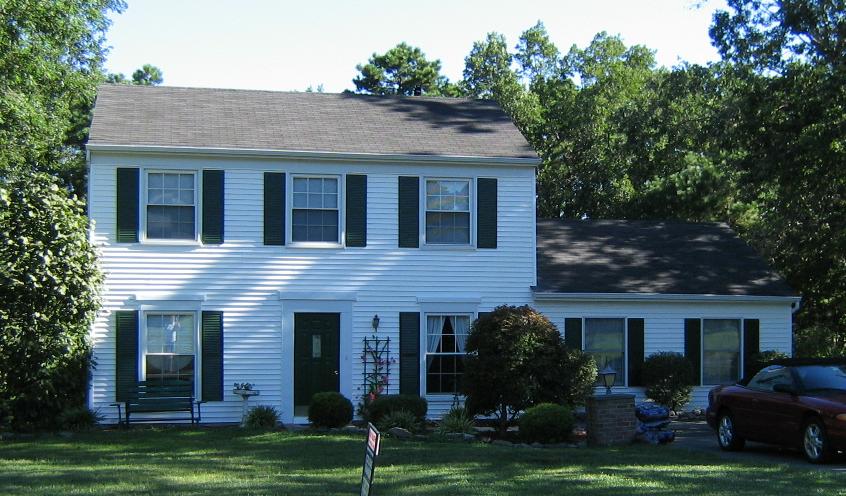
Our daughter lives in MA, about 25 miles from our new home in NH. My wife always said that the day she told us she was pregnant, the house would be going on the market and that’s exactly what we did back in April of 2007. The process of selling our house in a down market was painful. It took two and a half years from the time we put it on the market.
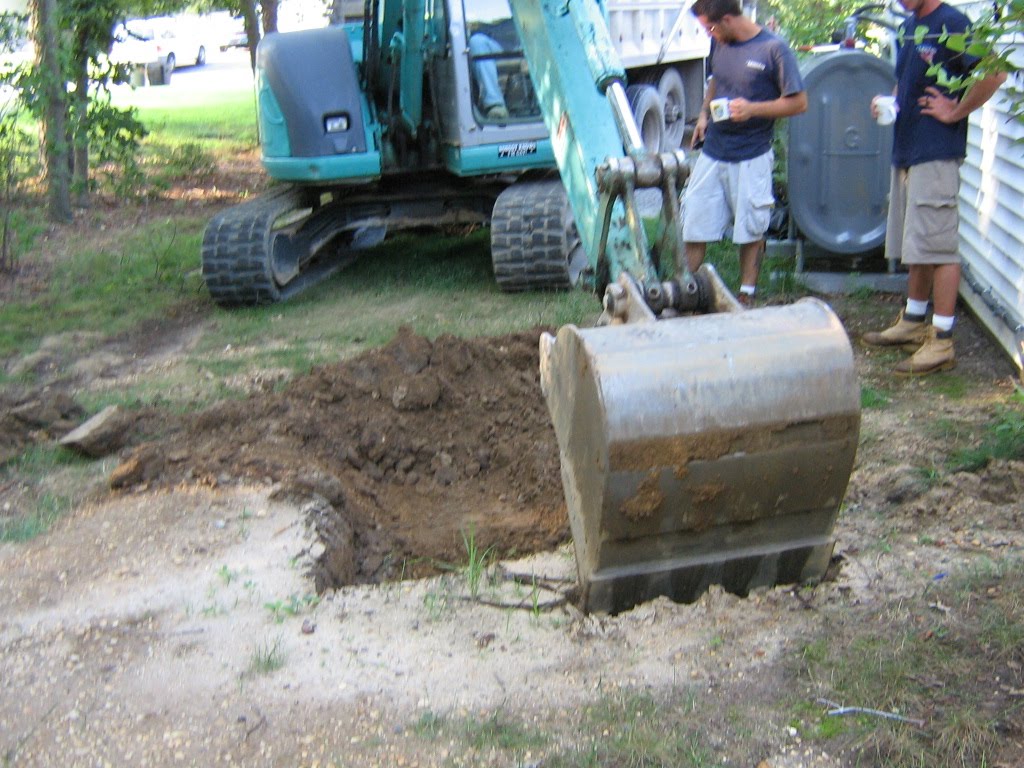 Actually, we sold it within ten days, but it was contingent on removing and underground oil tank. Unfortunately, when we removed it, they found a pin hole leak. The EPA allows up to 10,000 ppm before you have to remediate. Our reading was 11,300 ppm. In the end it cost over $10,000 and we lost the buyers, because they wanted their kids in school before Sept. If you know anything about dealing with the EPA and the state, you know there was no way to make that happen, as attested to by a three in high stack of paperwork. The process can actually take over a year or two.
 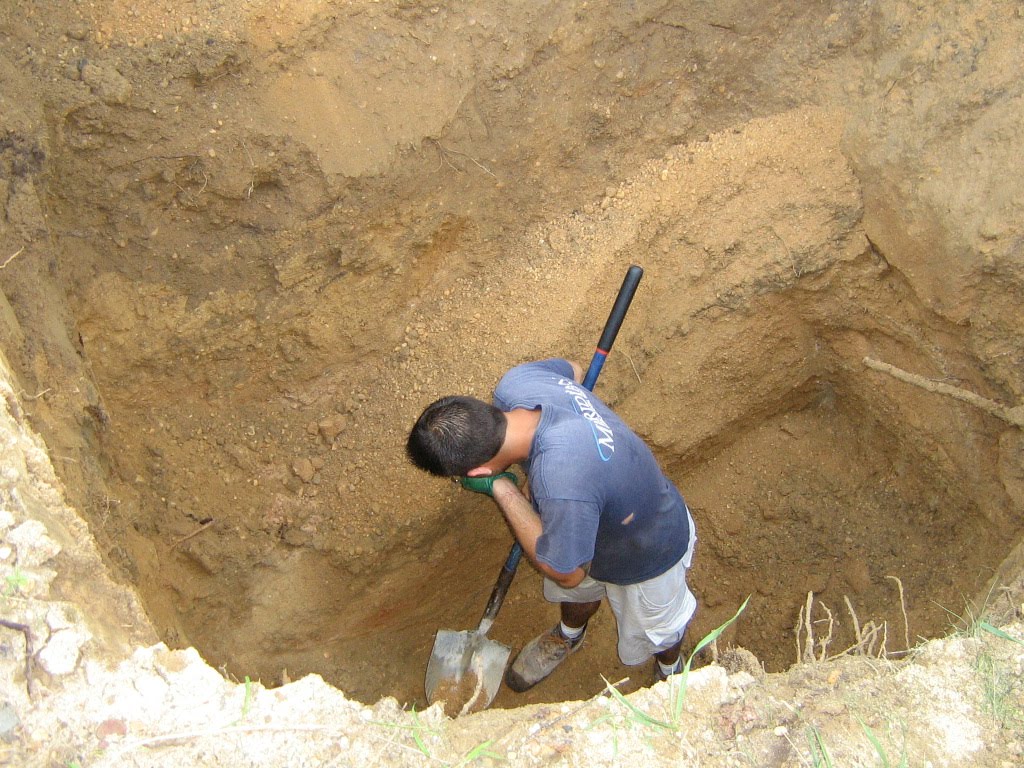 Fortunately, I was semi-retired and could stay on top of the process. I was on the phone constantly in an effort to expedite things, but I wasn’t a pest, and if there was a Nobel Prize for ass-kissing, I would have won it. My tactic paid off. I had established a good reporte with the remediation company and they agreed to slip me in between big jobs. The remediation process was actually completed in August, but there was still the state to deal with, and that took until October. By this time, the market had tanked.
Over the next two years we added upgrades, kept the house spotless, and reduced the price in conjunction with the changing market. I won’t detail the process except to say that we lost two more buyers, because they couldn’t secure financing, and turned down two offers that in retrospect were not as bad as they seemed at the time.
Finally we sold the house in August, during a 10 day period where we had three offers. One was way too low and the other two were lower than we wanted, but workable. The first was a cash deal that was $8,000 lower than the second, which was an FHA loan. The people were prequalified. We opted for the FHA, because they wanted to close within 30 days. In retrospect, that was a mistake. There was more than $8,000 in aggravation.
We had two and a half years to watch the market where we wanted to move and figured we would have to take a small mortgage in order to keep from feeling a financial pinch, so the race was on. We had to head up to NH, make and offer on a house and secure a mortgage. With the help of Beth Redmond, an absolutely top notch real estate agent, we were able to get everything done.
While we were in the process of getting the mortgage and making all of the arrangement for the move we were hearing nothing from our buyers, their agent or their lawyer. Calls from our lawyer, my agents, and even our title company to their lawyer were getting nowhere fast.
While our agent, Beth Redmond, was on top of everything and an absolute joy to work with, their attorney, Jeffrey Roth for Lakewood, NJ was one of those layers who is the reason for lawyer jokes. He gave absolutely no information about where they were in the process at any point in the process. The closing date came and went four times. My attorney, here secretary, both of my agents, and the title company said that they never experienced anything like his lack of consideration and response.
Part of the problem was the buyer who was doing everything himself and wasn’t able to complete things in a timely fashion. Between his refusal to let his agent do want agents are supposed to do and the lawyer’s lack of communication, it he cost them considerable money. There was four hundred dollars in penalties and a few thousand dollars in furniture that we were going to leave for them, but donated to charity, because we couldn’t establish what they wanted or if they wanted anything.
If you are living in Ocean County NJ and are thinking of selling or buying a home, stay far, far away from Jeffrey Roth, of Roth and Roth, in Lakewood. On the other hand, if you are thinking of selling a home, Debby Ficke of Diane Turton did everything I could have asked for to sell our home in a down market, and Beth Redmond is who you want to contact if you are buying a home in southern NH.
Now here’s the kicker. When we moved, as we were unpacking, I came across my Bar Mitzvah album. The first thing I came across was a stack of telegraphs. The first three were from relatives I didn’t know, but they all had the last name of Roth! It is possible that I am related to Jeffrey Roth, but I have no desire to find out, because if we are related, I would disown him, because I would not want to have anyone as inconsiderate as he in my family tree.
I'm doubly thankful that our first weeks in NH have been in stark contract to the weeks leading up to the move.
Wednesday, November 25, 2009
Why I Like NH Better than NJ - Reason 2
Skilled artisans and technicians can be found in NJ if you look hard enough, but mediocrity is pervasive and don't try to get component level trouble shooting for your TV.
While in NJ, we had a 9 year old large screen projection TV that once turned off, would not turn on again for 4-6 hours. I did some research and found that it was most likely a bad capacitor on one of the boards. I began calling around, but no one would come out to my house and no one would trouble shoot at the component level. The best they could do was have me haul it in and they would replace the entire circuit board for about $450.
When we arrived in NH, I asked around and was told that Tony's TV Repair in Portsmouth would come out and would trouble shoot. I called them and Mark, their tech spent about 15 minutes with me on the phone doing as much trouble shooting as he could that way. He then did his research, ordered a set of 8 capacitors and set up an appointment. He was clear that if they didn't do the job, it would then be a needle in a haystack search that would require bench work at the shop and probably not worth doing.
When he arrived we duplicated the problem, he pressed two keys on the front panel and an LCD flashed out an error code suggesting the capacitors on the signal board were the most likely problem. He replaced them and we gave it a try. While it didn't solve the problem, it did improve things considerably.
He said he could replace the capacitors on the other board, but if they were the problem we would have gotten a different error code. He felt that the problem could also be a transistor, in which case it would have to go to the shop for serious bench work. I decided to leave things as they were.
Watching him work was a pleasure. I'm trained in computer repair and even if I knew which capacitors to replace, it would have taken me at least two to three times as long to do what he did. He traveled 25 miles in each direction and spent well more than an hour here, but since he couldn't fix it, he just charged me the travel charge, the minimum labor charge and the cost of the four capacitors. It cost $156, which considering everything, was a bargain. The set is working better and I am perfectly happy with the results.
Thanks, Mark!
I've had a similar experiences with my house, my car, and even my hair, but more about them in a future posts.
Friday, November 20, 2009
Why I Like NH Better than NJ - Reason 1
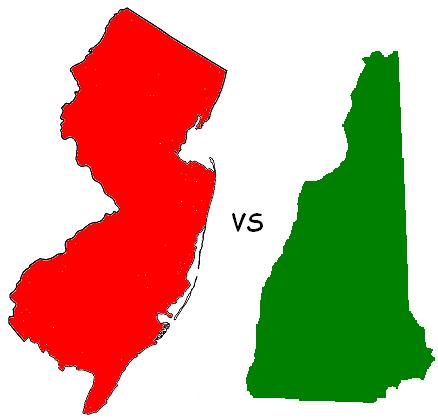
I spent the first 65 years of my life in NJ. Three weeks ago we moved to NH and after less than one month here, I'm sorry it too me so long get here. I'm going to begin writing a series of short posts on why I like NH better than NJ.
Reason 1 - Traffic... Actually different aspects of traffic will make up a number of reasons. First, but not foremost, is that drivers are courteous and drive at or near the speed limit. Of course being from NJ, and traveling mostly on the Parkway and Turnpike, I'm used to traveling with the flow of traffic at 10-15 miles above the speed limit(40-50 mph below the speed limit).
This brings me to the main reason I like NH. There is far less trafic and people actually use the passing lane to pass and move from the left lane if you come up behind them. In NJ, there are more people traveling in the passing lanes than in the right lanes, and they nest there like birds sitting on eggs. In one month, I have only had to pass ONE person on the right.
Of course the Live Free or Die motto is also carried out on the road, because seat belts are optional for those over 18, there is no helmet law for motorcycles, and anyone 15 and a 1/2 can drive with an adult over 25 without even a learner's permit.
Monday, October 12, 2009
Whatever Happened to Journalism?
For the past few weeks I have been in the throws moving from NJ to NH. Three years ago, the only qualification for getting a mortgage was a pulse and the ability to sign a document. Today, you have to give your first born and five forms of proof that he/she belongs to you. As a result, writing hasn't been high on my agenda, and it still isn't, but I do want to point you to two posts. The first is reprinted below and the second is a more comprehensive follow up to the first. If you are short on time, read this. If you want the full list of 22,jump right to this version.
Eleven More Things I’d Do if I Ran a News Organization Posted by Dan Gillmor in Techniques
Eleven More Things I’d Do if I Ran a News Organization Posted by Dan Gillmor in Techniques
Well, that was interesting. When I posted those “Eleven Things I’d Do if I Ran a News Organization,” I confess I wasn’t expecting the great response, which ranged from compliments to potshots to refinements to suggestions (and more).
The list of 11 wasn’t meant to be comprehensive. Still, I’ve been asked if those items represented everything on my hypothetical plate. Of course not. (Contrary to what some folks said about the previous list, these aren’t just aimed at newspapers; they apply to any media organization that purports to do journalism.)
Anyway, here are 11 more things, not in any particular order, that I’d insist on if I ran a news organization.
1. Nix on anonymous sources: Except in the most dire of circumstances — such as a threat to a whistleblower’s life, liberty or livelihood — we would not quote or paraphrase unnamed sources in any of our journalism. If we did, we would need persuasive evidence from the source as to why we should break this rule, and we’d explain why in our coverage. Moreover, when we did grant anonymity, we’d offer our audience the following guidance: We believe this is one of the rare times when anonymity is justified, but we urge you to exercise appropriate skepticism.
2. Blow the whistle on liars: If we granted anonmyity and learned that the source had lied to us, we would consider the confidentially agreement to have been breached by that person, and would expose his or her duplicity, and identity. Sources would know of this policy before we published. We’d further look for examples where our competitors have been tricked by sources they didn’t name, and then do our best to expose them, too.
3. Mustn’t do this: The word “must” — as in “The president must do this or that” — would be banned from editorials or other commentary from our own journalists, and we’d strongly discourage it from contributors. It is a hollow verb and only emphasizes powerlessness. If we wanted someone to do something, we’d try persuasion instead, explaining why it’s a good idea (though almost not certainly an original one with us) and what the consequences will be if the advice is ignored.
4. Point to competitors: We’d routinely point to our competitors’ work, including (and maybe especially) the best of the new entrants, e.g. bloggers who cover specific niches. When we’d covered the same topic, we’d link to them so our audience can gain more perspectives. We’d also talk about and point to competitors when they covered things we missed or ignored.
5. Pile on big stories: Beyond routinely pointing to competitors, we would make a special effort to cover and follow up on their most important work, instead of the common practice today of pretending it didn’t exist. Basic rule: The more we wish we’d done the journalism ourselves, the more prominent the exposure we’d give the other folks’ work. This would have at least two beneficial effects. First, we’d help persuade our community of an issue’s importance. Second, we’d help people understand the value of solid journalism, no matter who did it.
6. Be relentless: The more we believed an issue was of importance to our community, the more relentlessly we’d stay on top of it ourselves. If we concluded that continuing down a current policy path was a danger, we’d actively campaign to persuade people to change course. This would have meant, for example, loud and persistent warnings about the danger of the blatantly obvious housing/financial bubble that inflated during this decade.
7. “Start Here”: For any person or topic we covered regularly, we would provide a “baseline” — an article (or video, etc.) where people could start if they were new to the topic, and point prominently to that “start here” piece from any new coverage. We might use a modified Wikipedia approach to keep the article current with the most important updates. The point would be context, giving some people a way to get quickly up to speed and others a way to recall the context of the issue.
8. Do Something About It: For any coverage where this made sense, we’d tell our audience members how they could act on the information we’d just given them. This would typically take the form of a “What You Can Do” box or pointer.
9. No sock puppets: We’d work in every possible way to help our audience know who’s behind the words and actions. People and institutions frequently try to influence the rest of us in ways that hide their participation in the debate, and we’d do our best to reveal who’s spending money and pulling strings. When our competitors declined to reveal such things, or failed to ask obvious questions of their sources, we’d talk about their journalistic failures in our own coverage of the issues.
10. Assess risks honestly: Journalists constantly use anecdotal evidence in ways that frighten the public into believing this or that problem is larger than it actually is. As a result, people have almost no idea what are statistically more risky behaviors or situations. And lawmakers, responding to media-fed public fears, often pass laws that do much more aggregate harm than good. We would make it a habit a) not to extrapolate a wider threat from weird or tragic anecdotes; b) to frequently discuss the major risks we face and compare them statistically to the minor ones; and c) debunk the most egregious examples of horrible stories that spark unnecessary fear or even panic.
11. No op-eds from major politicians or executives. OK, this is a minor item. But these folks almost never actually write what appears under their bylines. We’re being just as dishonest as they are by using this stuff. If they want to pitch a policy, they should post it on their own web pages, and we’ll be happy to point to it.
Saturday, September 5, 2009
A Snapshot of Social Learning
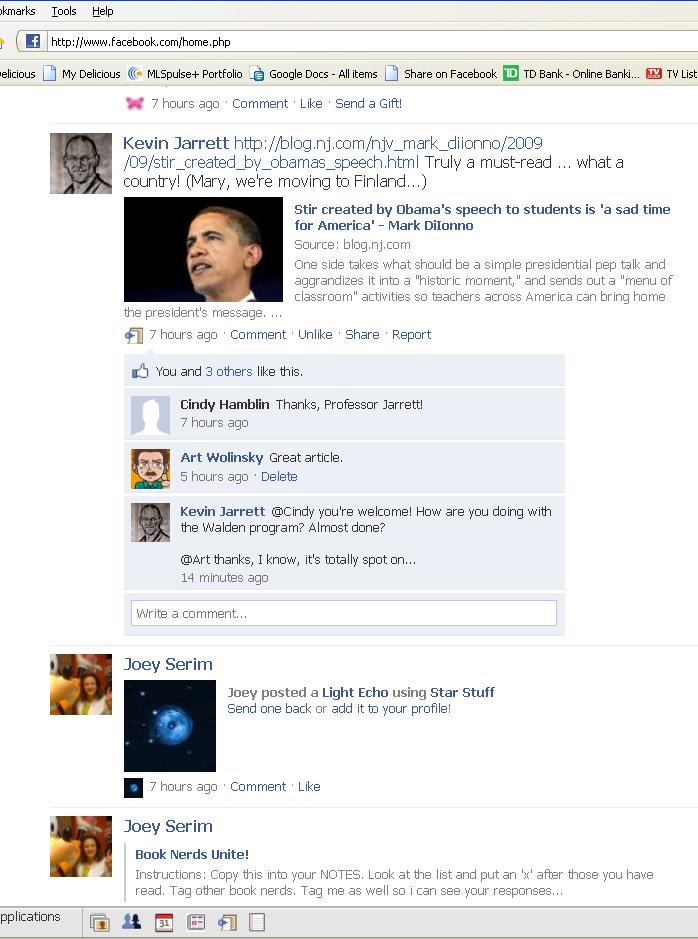 I checked into my Facebook page and began skimming the posts from friends and colleagues. There's a good mix of social and professional posts. Some I glance over, some make me laugh, some make me cry, and some make me think and learn.
 Kevin Jarrett posted a link from Jersey.com that talked about how schools are handling the President's address to the nation's students on Tuesday and the partition reactions that are in the news. The article was right on target. After reading it, I commented to Kevin that it was a great article, and went on to check the other entries on the page.
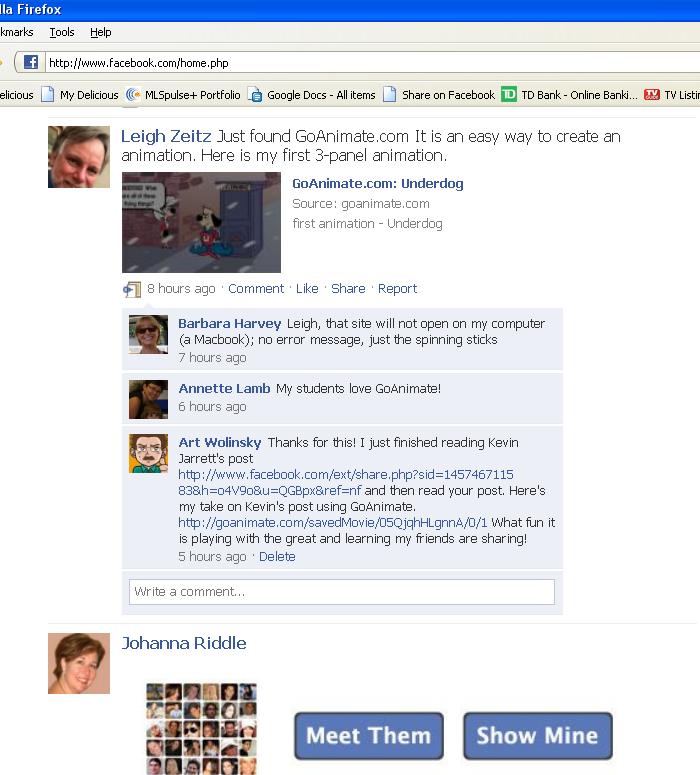 A few entries down, I came upon a post from Leigh Zeitz that pointed to a new animation site and his first three frame animation. Someone had commented that the page wouldn't load for them, but I had no problem. After visiting, I thought it was pretty cool. I created my own animation that was a commentary on the school speech insanity.
After publishing it, I went back to Leigh's post, commented about it, and created a link to my first attempt.
The President's Speech by awolinsky
At that point, I decided to write this blog entry, because I realized that the ongoing thread and social networking that had just taken place was a great snapshot of one kind of learning that takes place on the social web.
On Tuesday, while the President addresses the students, Ferdi Serim and I will be working with to teachers and folks from the Delaware DoE. Part of what we will be doing is figuring out how the social web can improve learning and their jobs.
This is the kind of learning opportunities we MUST provide for our student, yet the CoSN Leadership and Web 2.0 Leadership survey shows that even though 70% of administrators recognize the value of Web 2.0, for the most part, these tools are NOT being offered.
We are cheating our kids!!! We must facilitate this kind of collaboration and social learning.
I just went back to post a link to this blog entry and saw that Donna Baumbach had also learned from Leigh and posted an animation she will use in an upcoming workshop.
FAME GoAnimate by AuntyTech
If you know anything about social networks, you know that friends overlap. Kevin's post sent out ripples. Leigh's post sent out ripples. As the ripples reached others, their comments send out ripples to others. The interaction see on the page is just the visible learning ripples. The ripples that you don't see are reaching others and spreading the knowledge. We MUST provide this kind of learning for our students!
It's Saturday night. I can't help but wonder how far the ripples started by Kevin and Leigh will have traveled by Tuesday!
Tuesday, August 18, 2009
50% of the World is Below Average Intelligence
When I start losing faith in the human race, I remember something that was told to me by Jim Moran Sr. when I first started teaching. He told me that to keep things in perspective I should remember that by definition, 50% of the world is below average intelligence.
It’s hard to imagine that anyone in this country who has a TV and/or Internet connection doesn’t know about Megan Meier, the teen who committed suicide after being cyberbullied by an adult neighbor.
That being said, Elizabeth Thrasher, age 40, has either been living under a rock or had her common sense surgically removed at birth. She lives in the SAME COUNTY where the Megan Meier’s case made world-wide headlines and is now stands as the first person charged under that law that was created as a result of that case.
She is accused of posting the email address, cell phone number, and the picture of a 17 year-old with whom she was arguing on the Casual Encounters of Craigslist and suggesting the 17 year-old was looking for a sexual encounter.
This will be the first test of the new cyberbullying law and we will be hearing a lot more about it in the days and weeks to come. Regardless of the outcome, Elizabeth Thrashers will face the court of public opinion and suffer consequences there long before her formal court date.
I could go on for pages, but I’ll just let Forrest Gump say it for me. “Stupid is as stupid does!” Here's the story. http://tinyurl.com/pu23pe
It’s hard to imagine that anyone in this country who has a TV and/or Internet connection doesn’t know about Megan Meier, the teen who committed suicide after being cyberbullied by an adult neighbor.
That being said, Elizabeth Thrasher, age 40, has either been living under a rock or had her common sense surgically removed at birth. She lives in the SAME COUNTY where the Megan Meier’s case made world-wide headlines and is now stands as the first person charged under that law that was created as a result of that case.
She is accused of posting the email address, cell phone number, and the picture of a 17 year-old with whom she was arguing on the Casual Encounters of Craigslist and suggesting the 17 year-old was looking for a sexual encounter.
This will be the first test of the new cyberbullying law and we will be hearing a lot more about it in the days and weeks to come. Regardless of the outcome, Elizabeth Thrashers will face the court of public opinion and suffer consequences there long before her formal court date.
I could go on for pages, but I’ll just let Forrest Gump say it for me. “Stupid is as stupid does!” Here's the story. http://tinyurl.com/pu23pe
Subscribe to:
Posts (Atom)